Rogue’s restoration

Rudder, bowsprit, and ringframe

Exploded view of rudderstock internals.
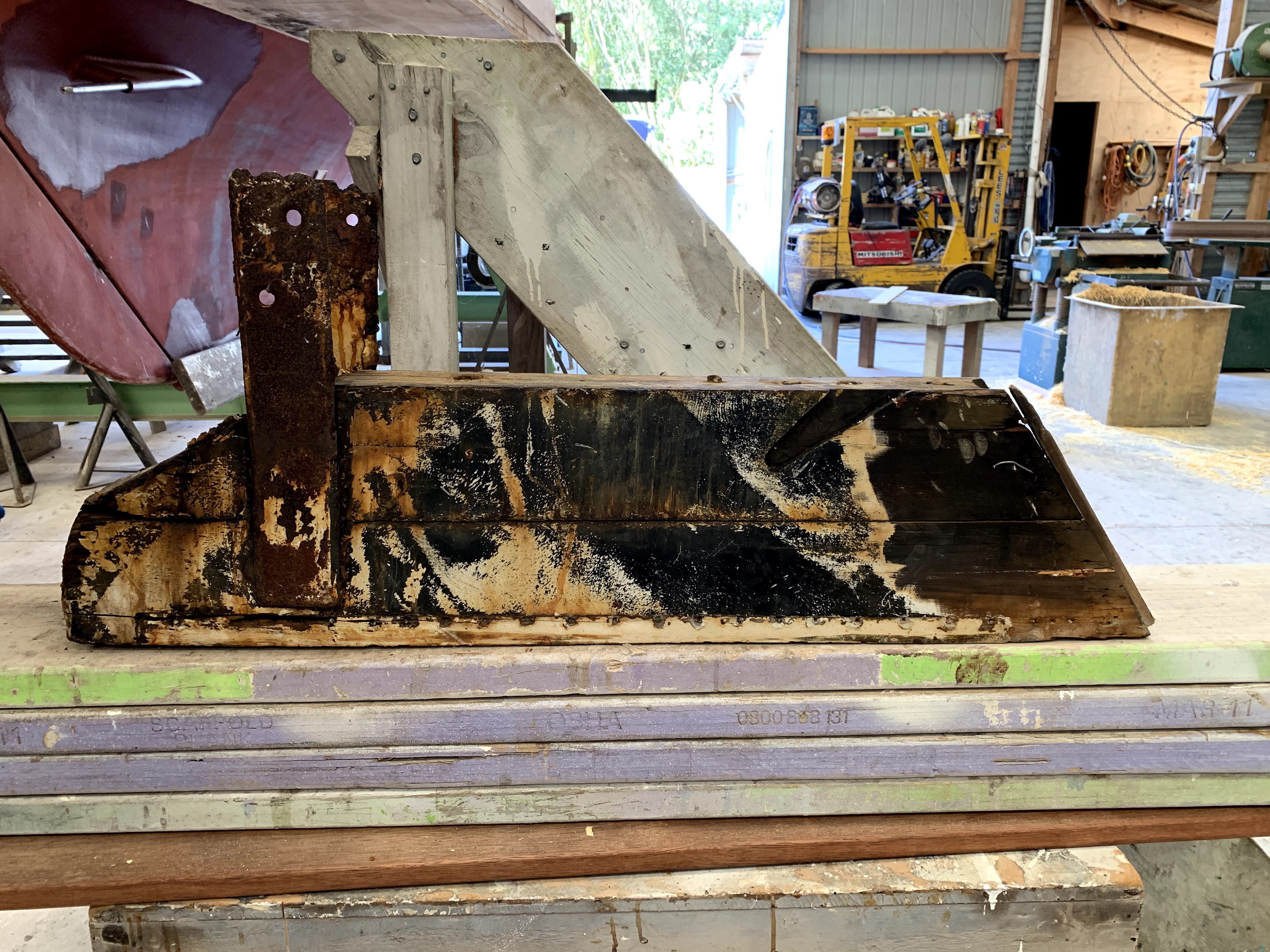
Bowsprit, butted up to sampson post, with cranse and gammon iron patterns fitted.
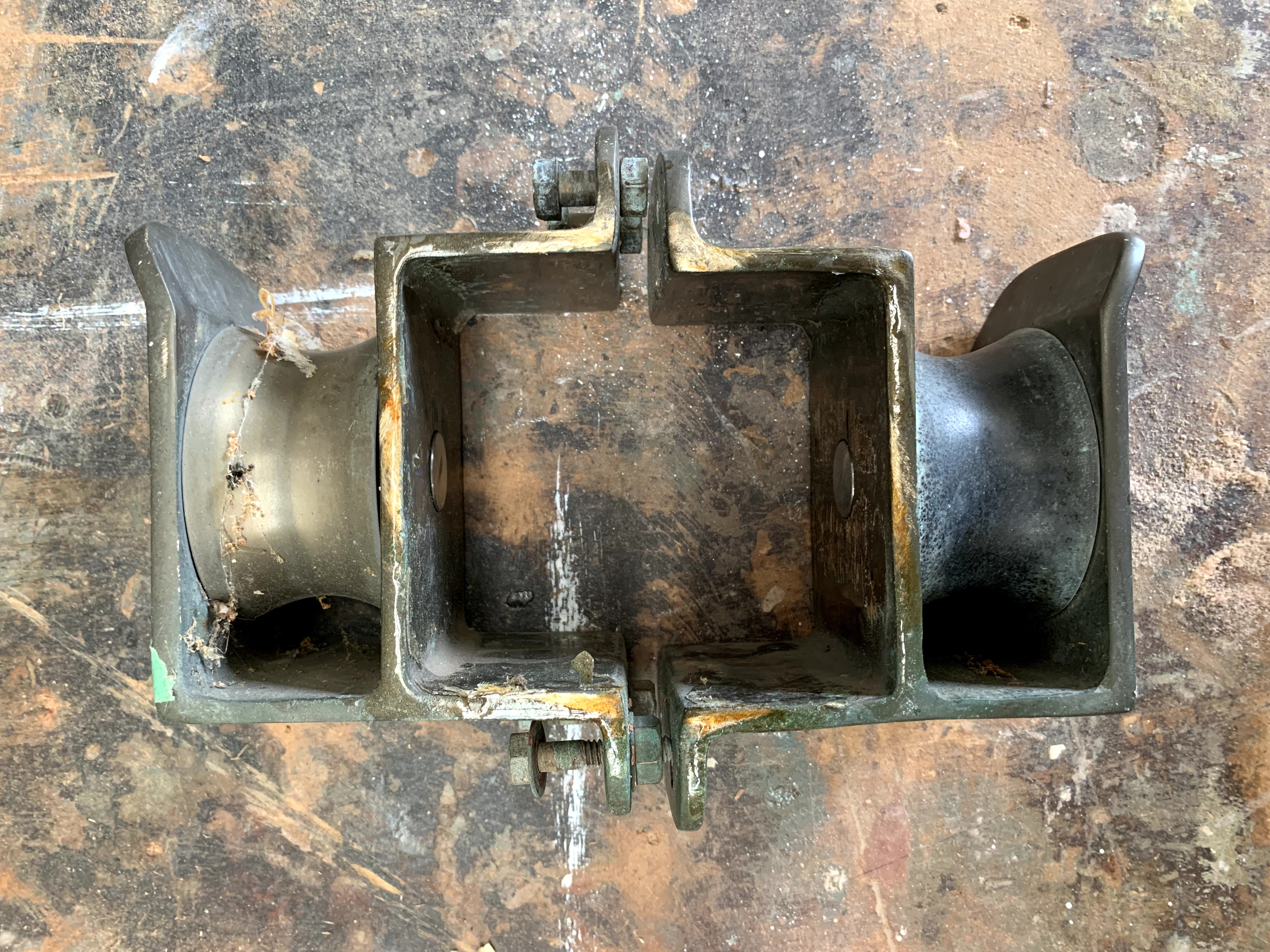
Mooring line block patterns (actually, Gloriana’s) for casting and fitting to bowsprit, forward of figurehead
New ringframe, beam, knees and floor at point of mast insertion from deck to maststep (and note uroxsysed fitted ceiling planks) …
… aligning with forward shroud, and pads for aft shrouds.
Electrics box (to support also switchbreaker, voltmeter, and VHF radio).
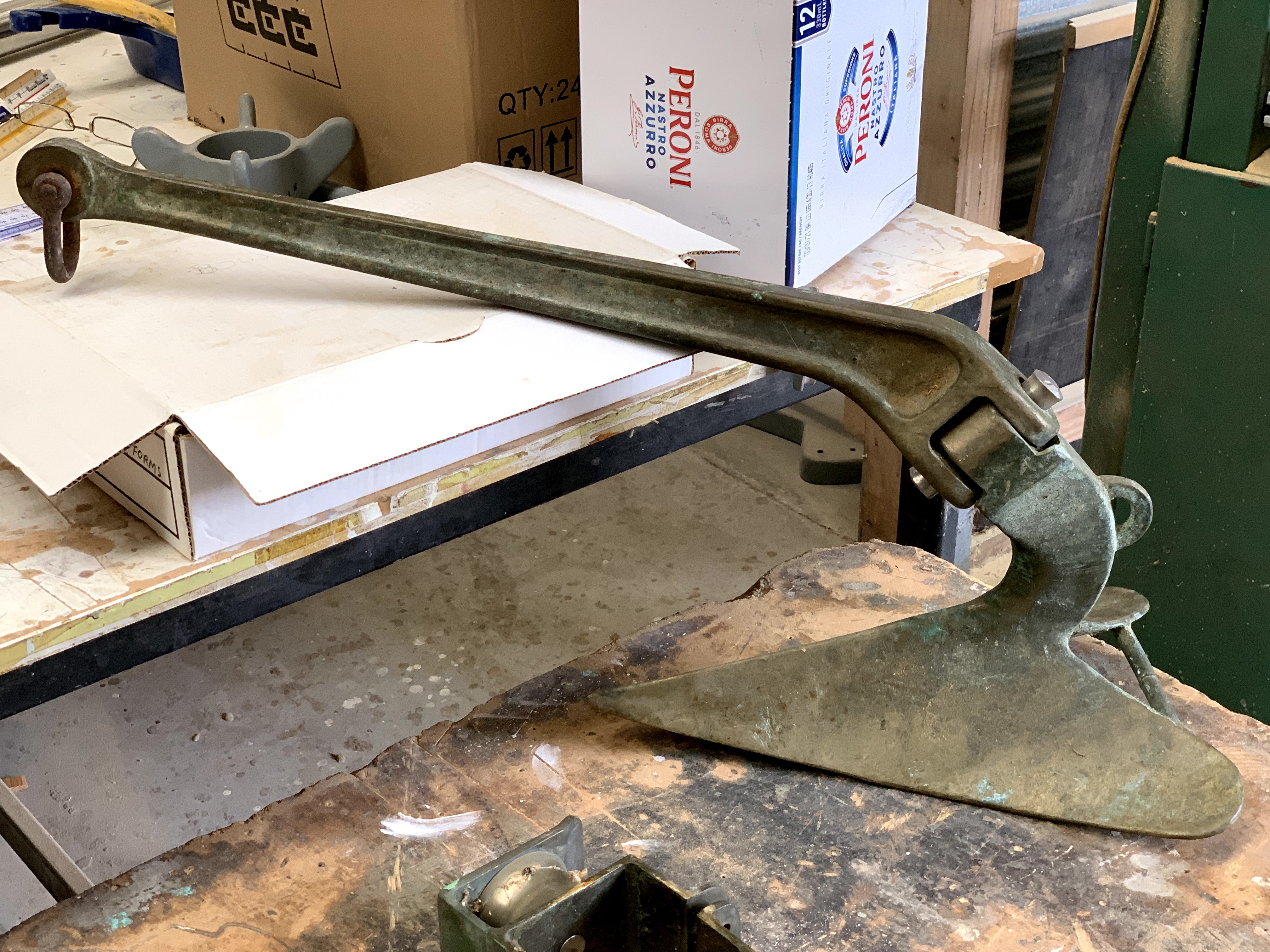
And a new (to Rogue) 12.5 kg bronze CQR anchor, likely manufactured at the RNZN Devonport Base.

Undercoat and spars

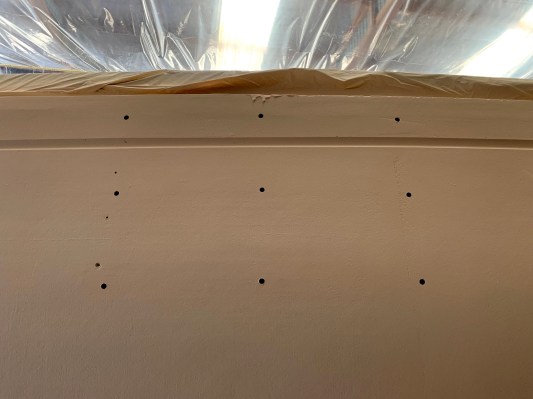
Hull undercoated; original waterline marked out.
Test cove line routed at point of port chainplates.
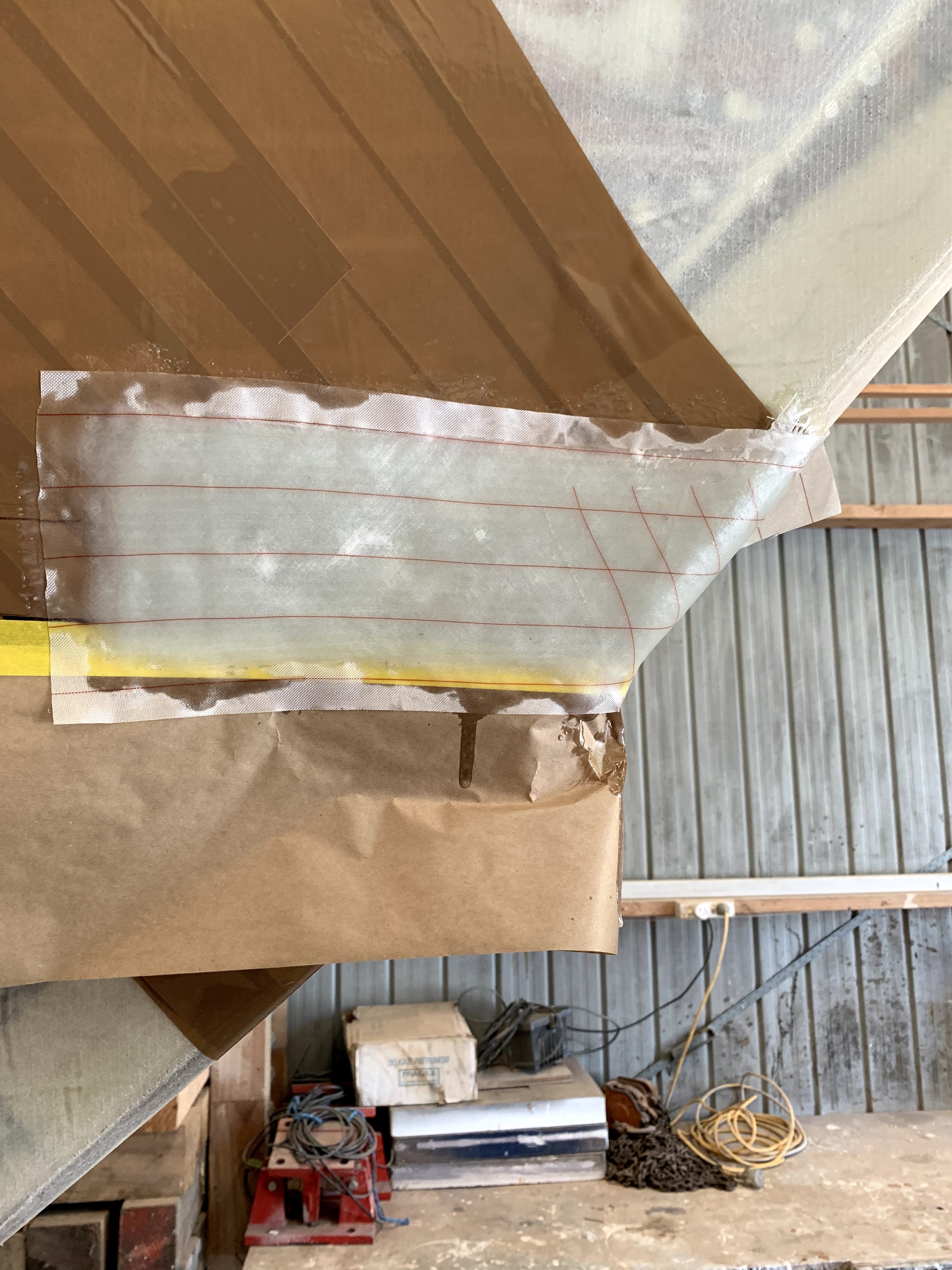
Hull/deck intersection augmented to sharp edge (for application of full length D moulding, integrating into chainplates), and toe rails test-fitted as far outboard as achievable.
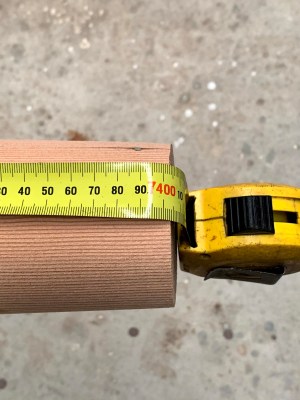
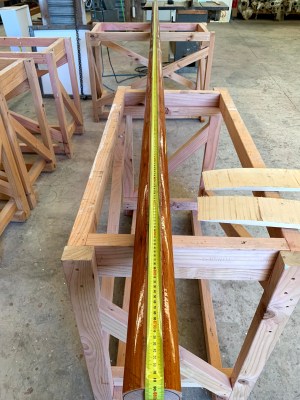
Oregon mast repurposed as 7.4m boom …
… and 4.8m gaff.
New bobstay pattern moulded on Rogue‘s stem, replacing the above.
Final Auckland sailplan and deck arrangements.

Rudder

New rudder blade …
… of fine proportion.
Bruce Askew’s cast bronze pintle.
Recess for strap.
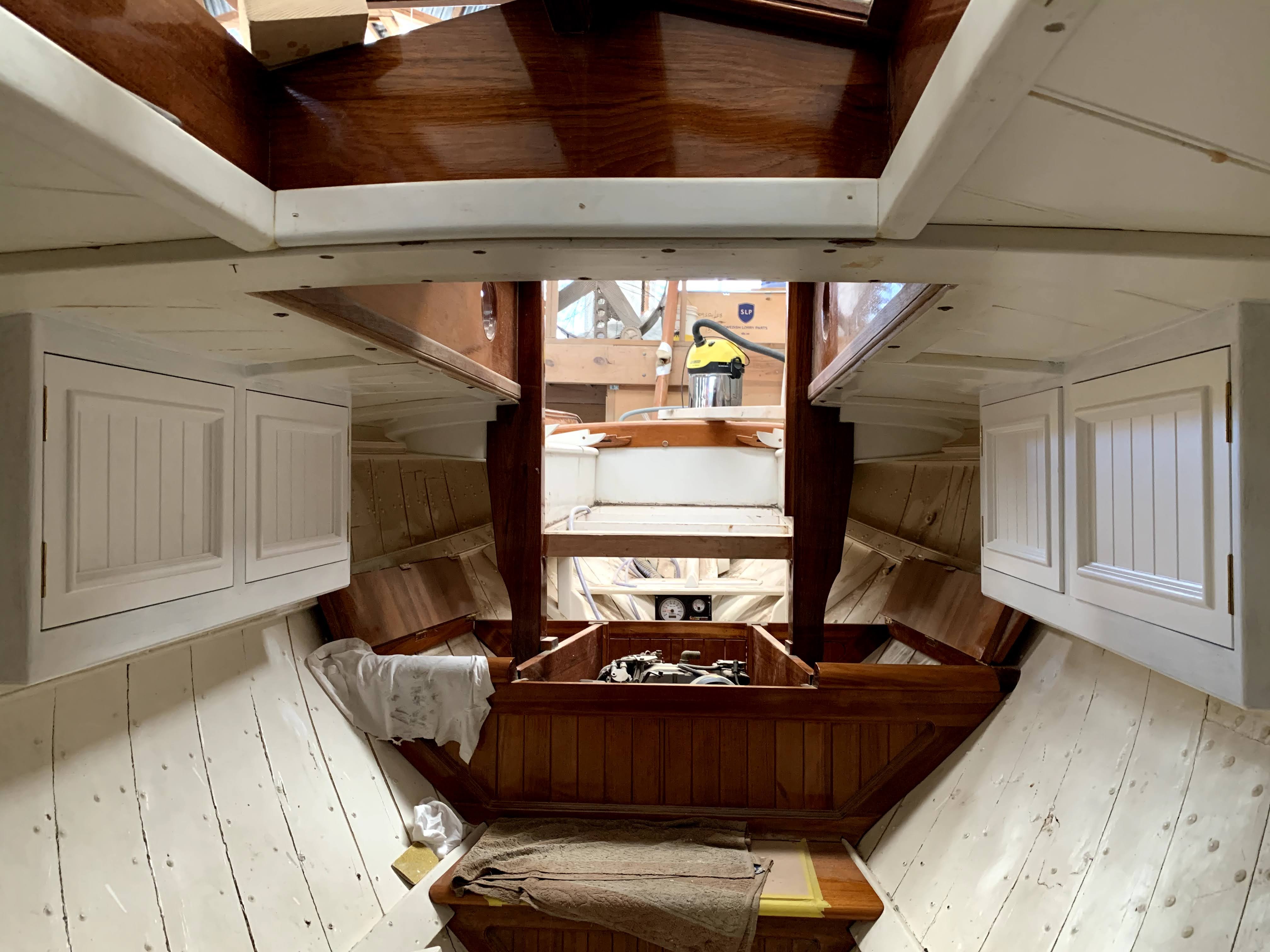
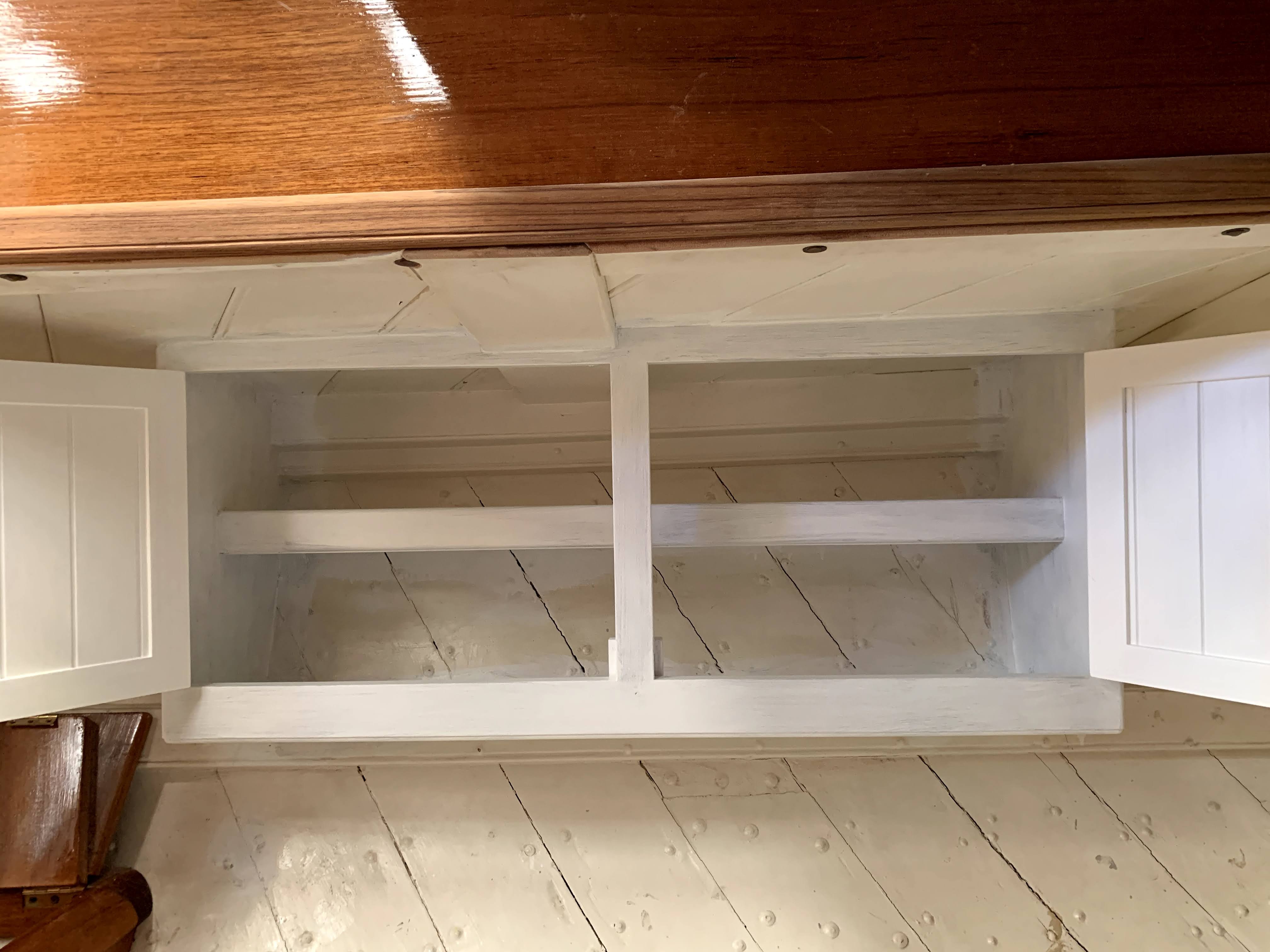
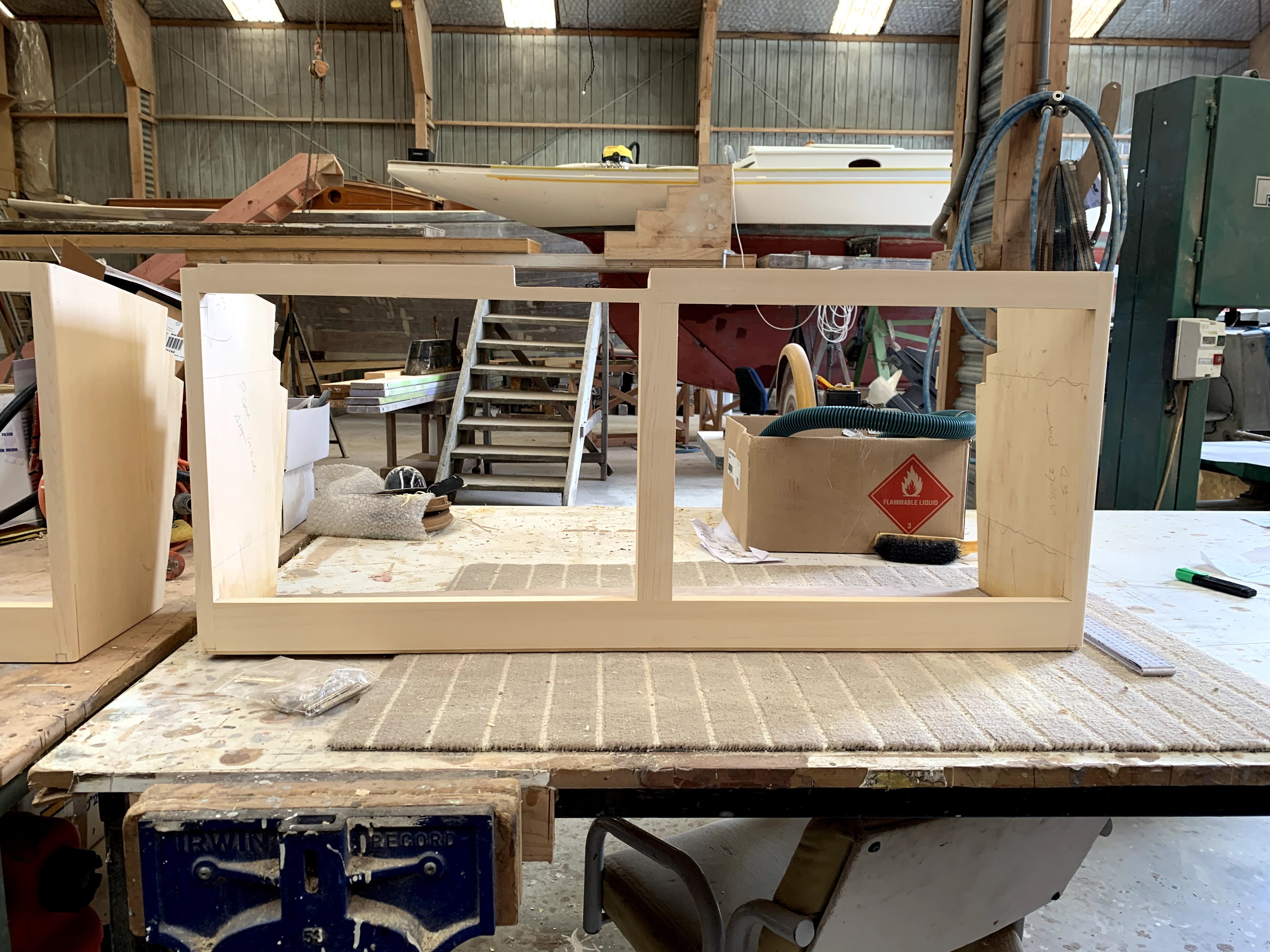
Lockers fitted.
Port locker including fiddled half-depth shelf.
Original chainplates (including half-round sections to continue hull mouldings) located in position.
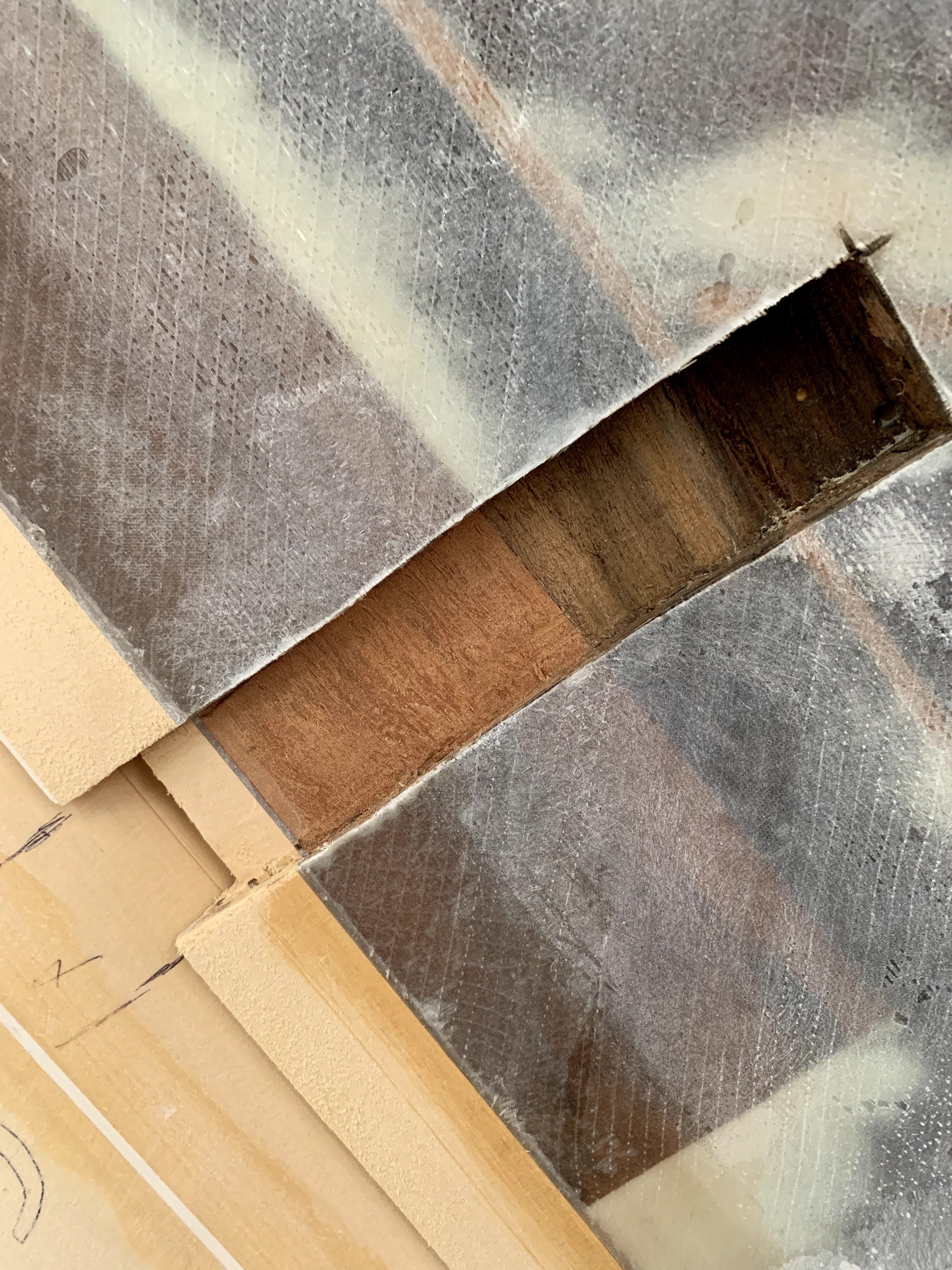
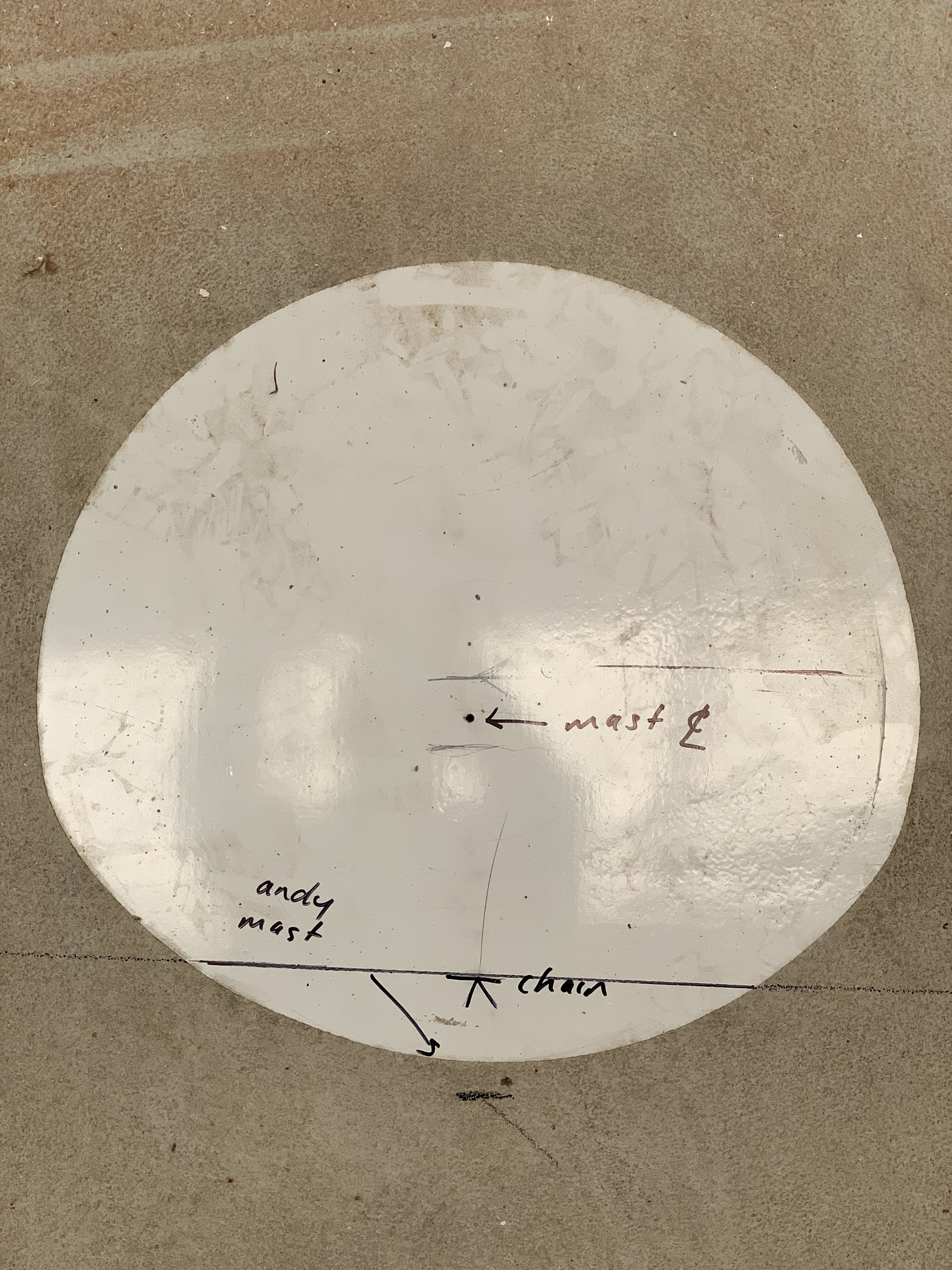
Mast position just aft of blank and forward chainplate. Hull/deck intersection glass-reinforced.
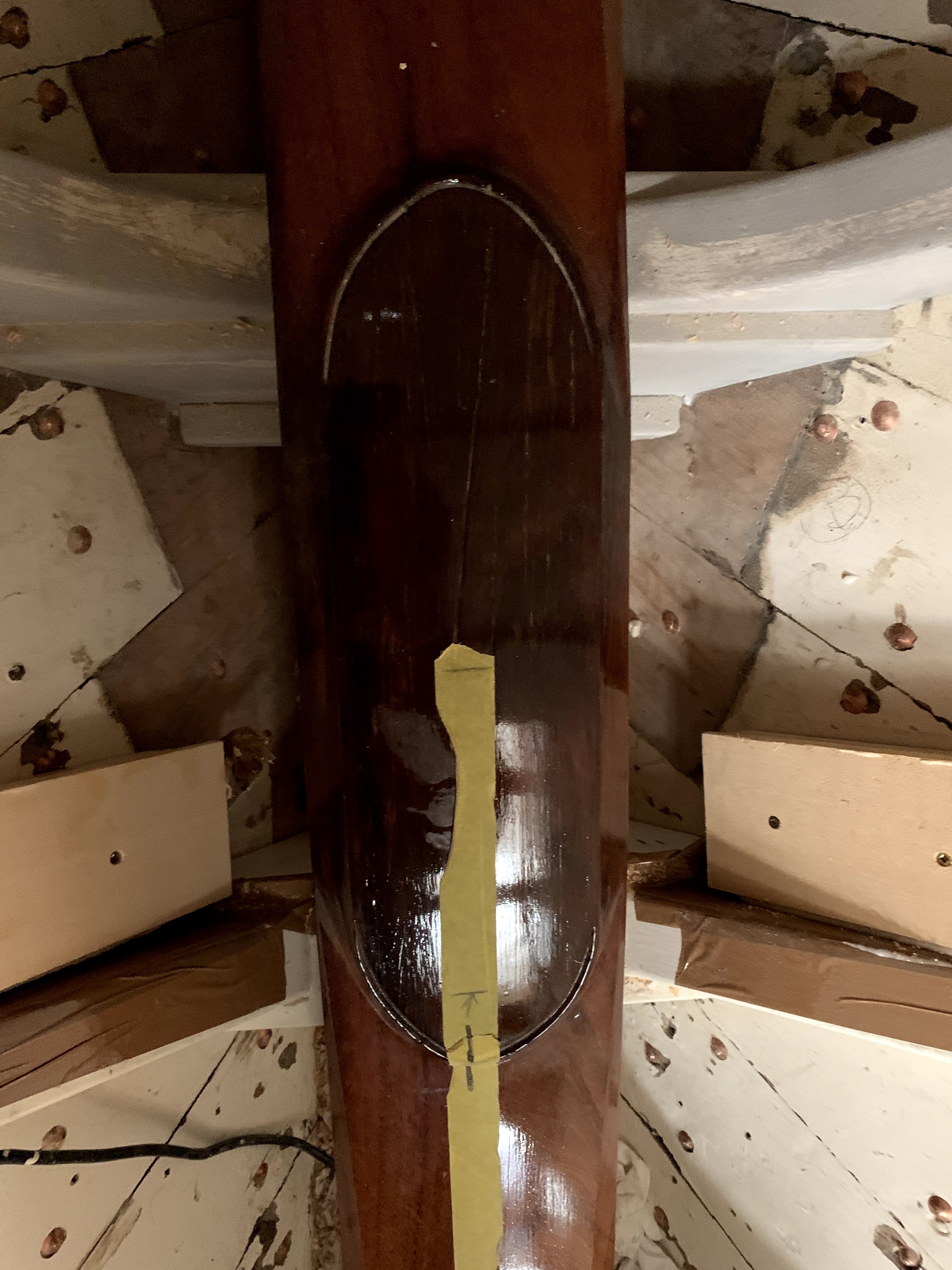
Mast position located directly above floor, at aft end of mast step plinth.
Ringframe pattern co-located with mast and forward chainplate position (mast step removed for ringframe’s construction).
Stem reinforced in position for dolphin-striker bobstay tang.
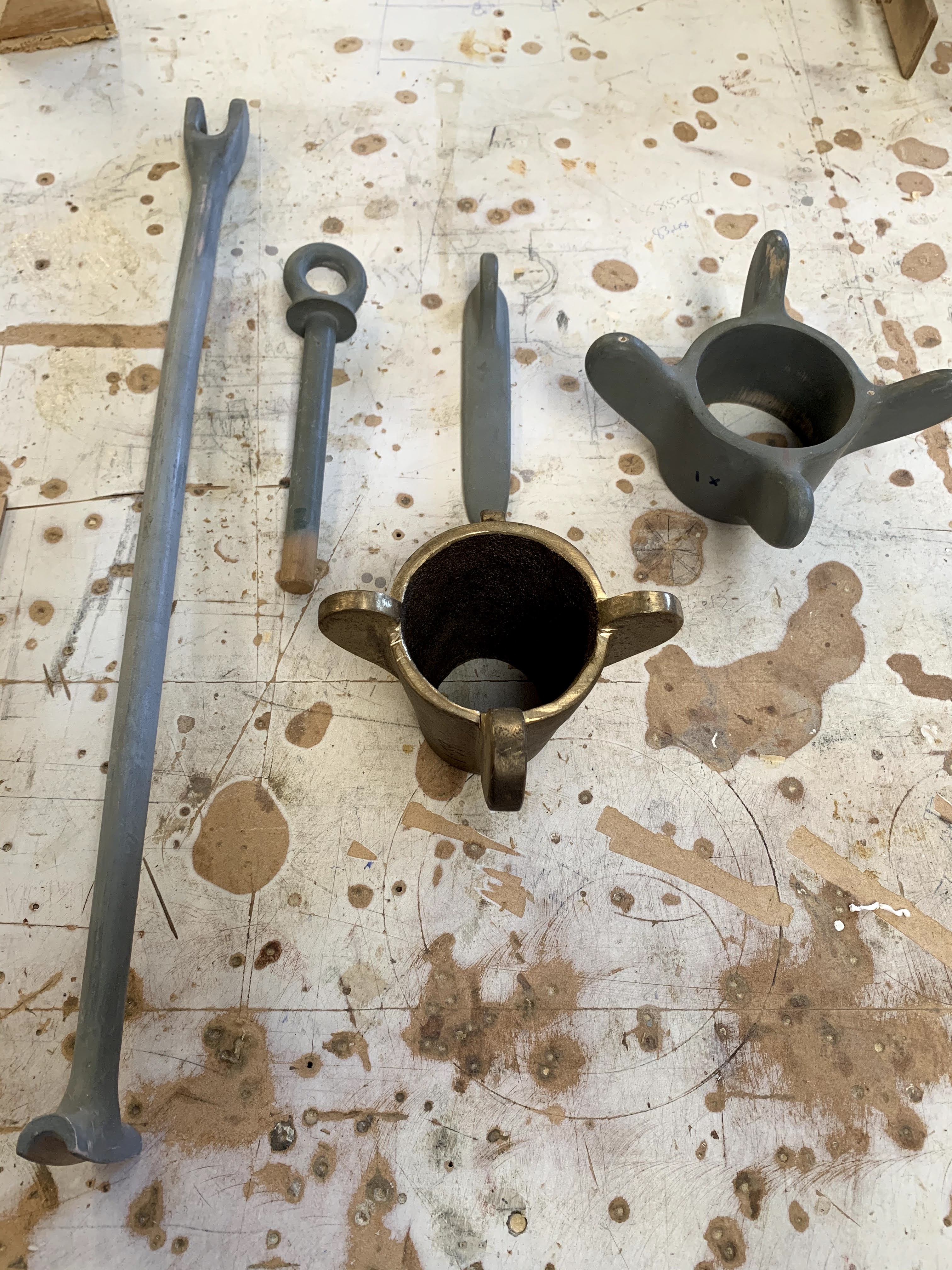
Courtesy of the 1904 Charles Bailey Jr Ngatira‘s Steve Horsley (thanks Steve!), patterns for casting (from left to right) the bowsprit’s whisker stay supports and dolphin-striker, deck padeyes, mast stay thumb cleats, and bowsprit cranse iron (Bruce Askew’s cast version (shown) deemed too tapered to maintain desirable bulk).

Ballast

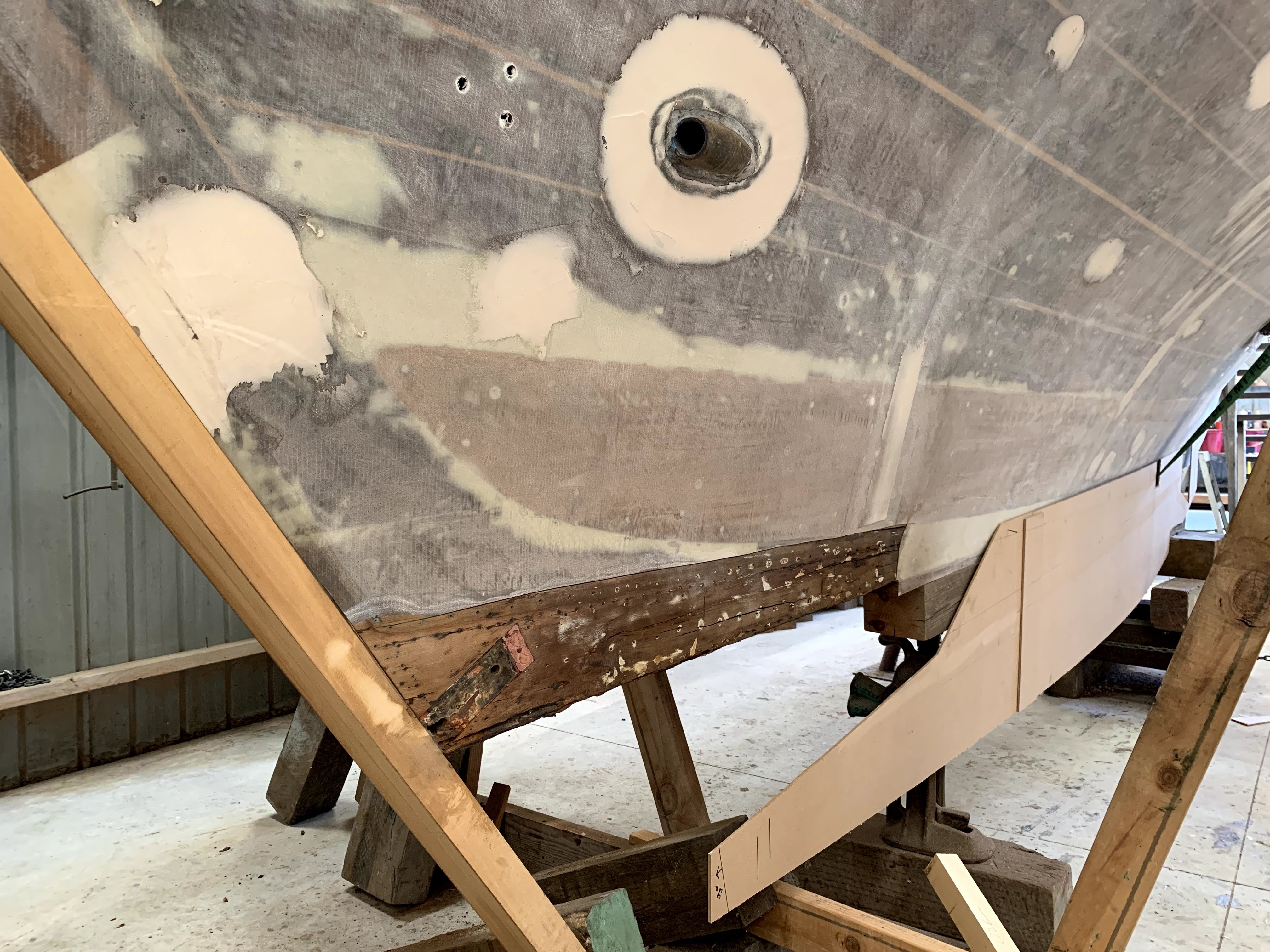
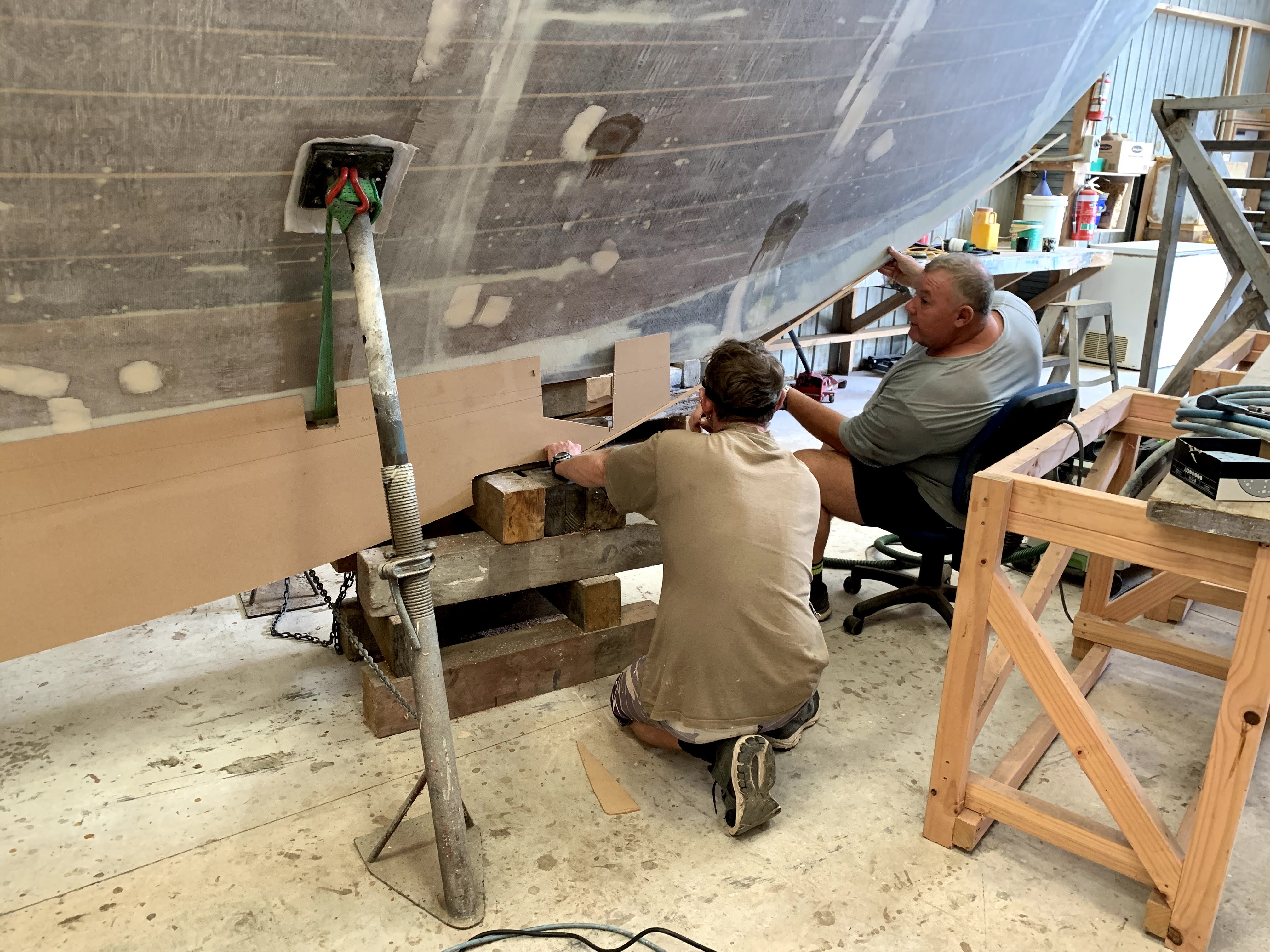
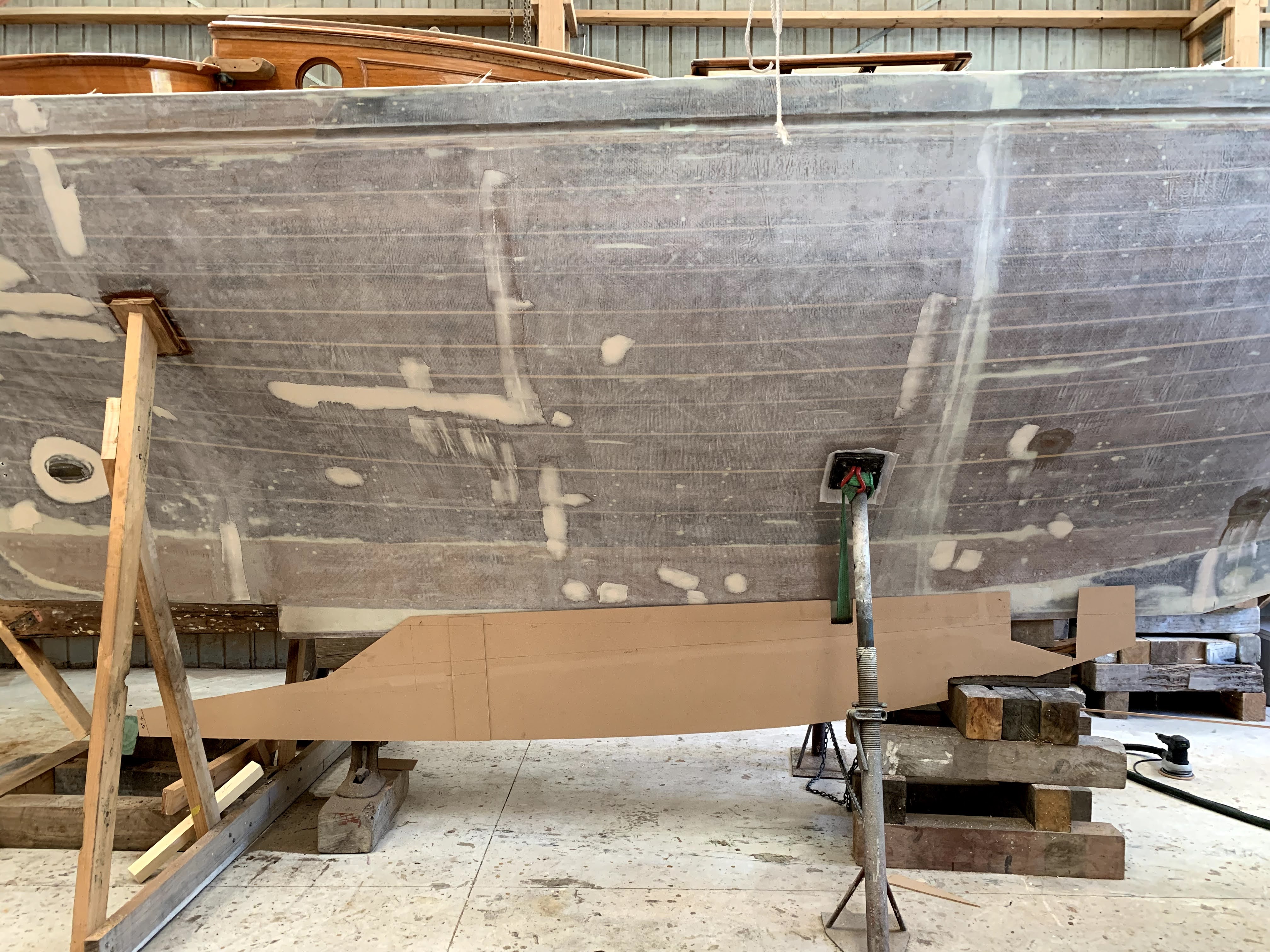
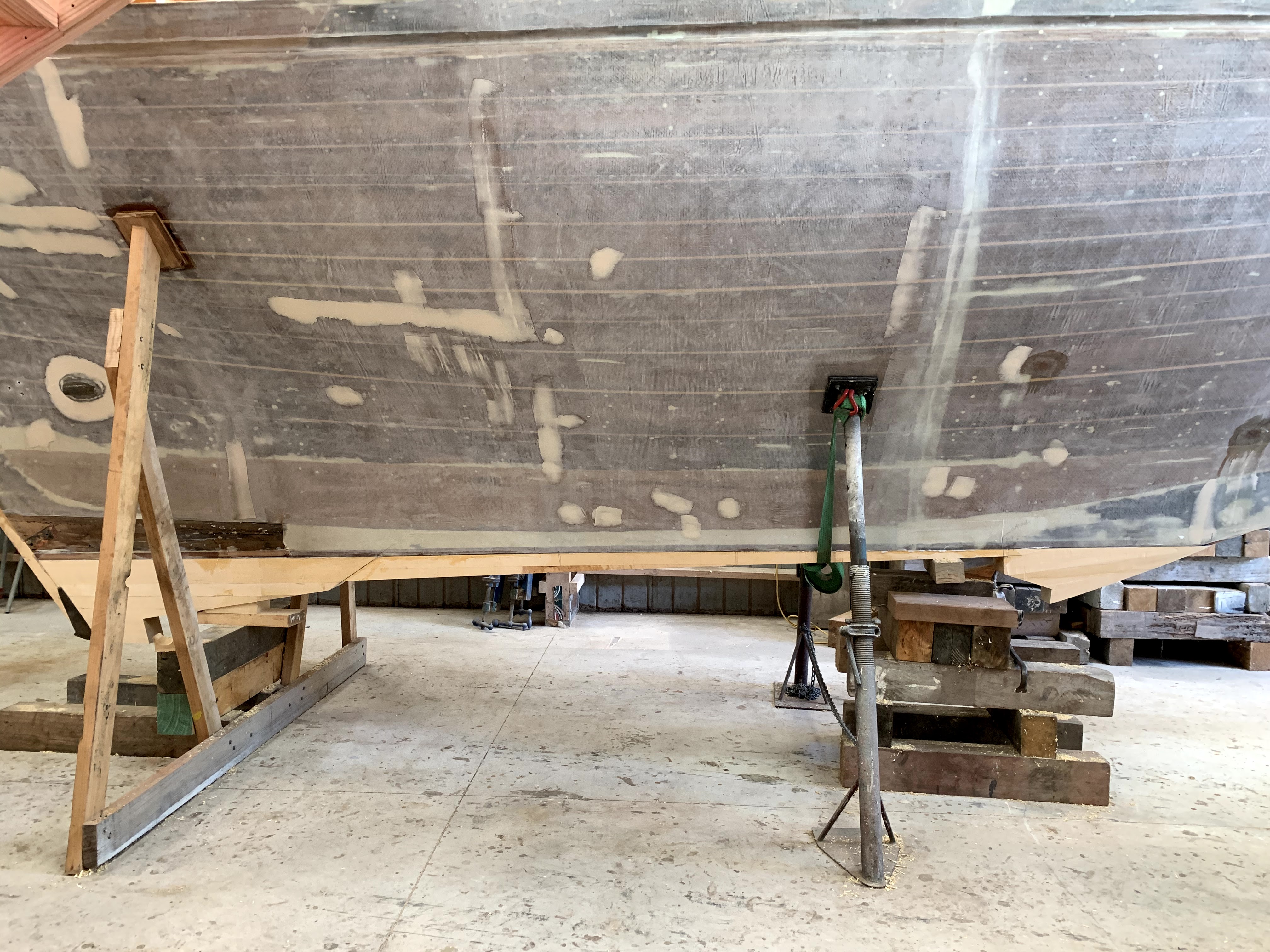
Ballast form sent to foundry for lead casting; fitting new deadwood of Alaskan yellow cedar; inserting pintle at bottom of sternpost; forming rudder blank; constructing port and starboard lockers, picking up bottom scribing line from located stringer, one with internal shelf, with doors to match companionway/enginebox panels.
Starboard
Port
Showing temporary props.
Locker door (x 4).